How to Get Rid of Bed Bugs: The Complete 2026 Guide for Calgary Homeowners & Renters
You're waking up with itchy bites. You found small blood spots on your sheets. Or worse — you saw a live bed bug crawl across your mattress. Bed bugs are one of the most stressful pest problems a household can face, and they're on the rise in Calgary.
Bed bug infestations have surged across Calgary in recent years, particularly in downtown, Beltline, and inner-city neighborhoods with high-density housing and frequent traveler turnover. But bed bugs can happen to anyone — they don't discriminate based on cleanliness. This guide covers everything you need to know to identify, eliminate, and prevent bed bugs.
What Are Bed Bugs?
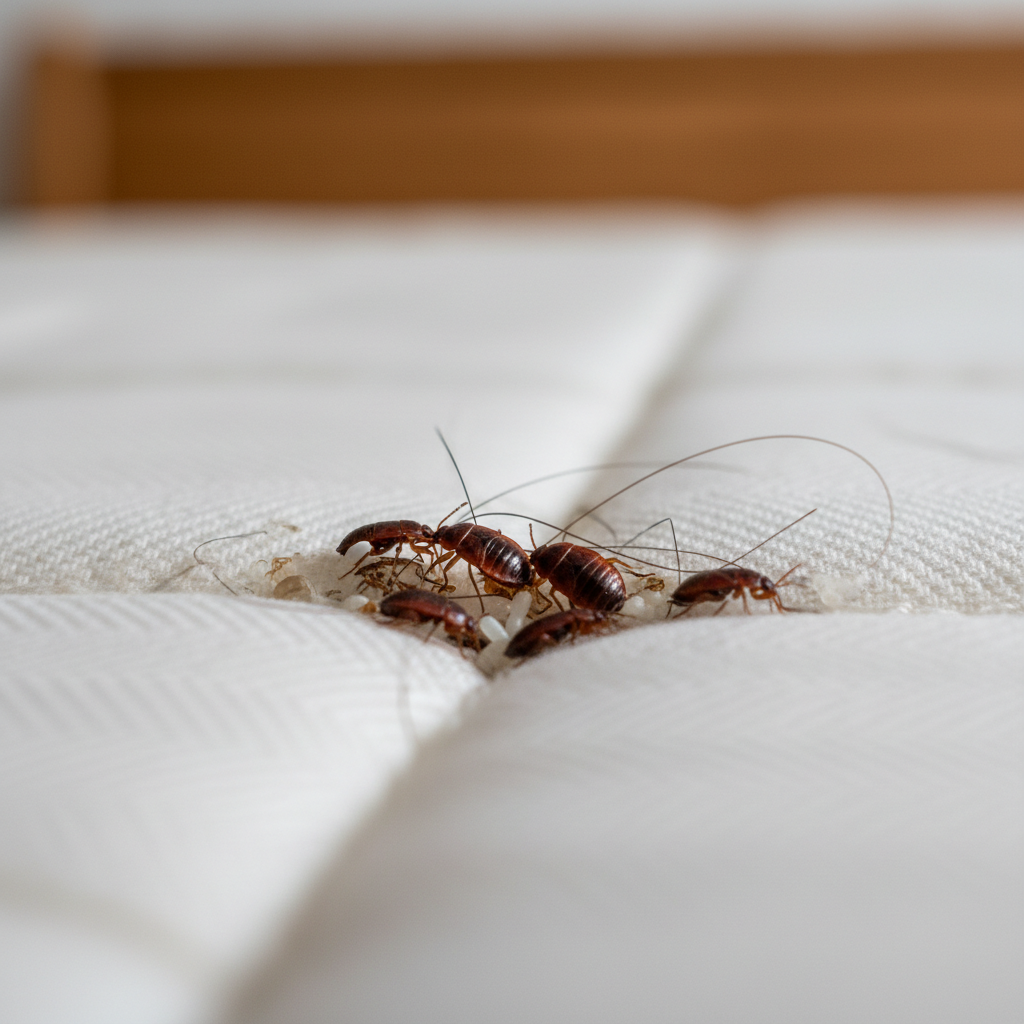
Bed bugs are small, wingless insects that feed exclusively on human blood. Adult bed bugs are:
- About the size of an apple seed (5-7mm)
- Reddish-brown in color (engorged after feeding)
- Flat and oval-shaped (unless they've recently fed, when they become swollen)
- Nocturnal — they feed at night while you sleep
Bed bugs are not a sign of poor hygiene. They're expert hitchhikers that travel on luggage, used furniture, clothing, and even on people. Anyone can get bed bugs.
Signs of a Bed Bug Infestation
Bite Symptoms
- Red, itchy bites often in a line or cluster (breakfast, lunch, dinner pattern)
- Bites typically on exposed skin: arms, shoulders, neck, legs
- Some people don't react to bites at all — so absence of bites doesn't mean absence of bed bugs
- Bites may take 1-2 days to appear
Physical Evidence
- Blood spots: Small rusty or dark red stains on sheets, pillowcases, and mattresses (crushed bugs or their fecal matter)
- Shed skins: Translucent, empty exoskeletons left behind as bed bugs grow
- Eggs: Tiny, pearly-white eggs (1mm) found in crevices and seams
- Live bugs: Found in mattress seams, box spring corners, bed frame joints, and headboard crevices
- Sweet, musty odor: A distinctive smell in heavily infested rooms
Where to Check
Inspect these areas thoroughly with a flashlight:
- Mattress seams, piping, and tags
- Box spring corners and frame joints
- Bed frame and headboard cracks
- Baseboards and carpet edges near the bed
- Nightstand drawers and joints
- Behind wall art and electrical outlets near the bed
- Behind peeling wallpaper
- Inside couch and chair seams
How Bed Bugs Spread in Calgary
Travel
The #1 way bed bugs enter homes is through travel. Bed bugs hide in hotel rooms, hostels, and even luxury accommodations. They crawl into luggage and come home with you.
Used Furniture
Secondhand mattresses, couches, bed frames, and upholstered furniture are common bed bug carriers. Never bring used furniture home without a thorough inspection.
Multi-Unit Buildings
In apartments and condos (common in Beltline, downtown, and inner-city Calgary), bed bugs spread between units through wall cavities, electrical outlets, and shared plumbing.
Visitors
Guests who have bed bugs at home can unintentionally bring them in on clothing or bags.
Public Transport
While less common, bed bugs can hitchhike on public transit, ride-share vehicles, and in movie theater seats.
How to Get Rid of Bed Bugs: Step-by-Step
Critical: Bed bugs are one of the hardest pests to eliminate DIY. Most homeowners who attempt DIY treatment end up calling a professional after weeks of frustration and a worse infestation. That said, here's what you can do immediately while arranging professional treatment.
Step 1: Contain the Infestation
- Don't move to another room — bed bugs will follow you and spread the infestation
- Don't throw out your mattress yet (this rarely solves the problem and spreads bed bugs through your home)
- Isolate the bed: pull it away from walls and ensure bedding doesn't touch the floor
Step 2: Wash and Heat-Treat Bedding
- Strip all bedding, pillows, and affected clothing
- Wash in hot water (at least 60°C/140°F)
- Dry on the highest heat setting for at least 30 minutes — heat kills bed bugs at all life stages
- Place cleaned items in sealed plastic bags to prevent re-infestation
Step 3: Vacuum Thoroughly
- Vacuum the mattress, box spring, bed frame, baseboards, and carpet
- Pay special attention to seams, tufts, and crevices
- Immediately empty the vacuum into a sealed bag and dispose outside
- This won't eliminate bed bugs but reduces the population
Step 4: Encase Your Mattress
- Purchase bed bug-proof mattress and box spring encasements
- These trap any remaining bed bugs inside where they eventually starve (they can survive up to a year without feeding)
- Leave encasements on for at least 18 months
Step 5: Apply Diatomaceous Earth (Supplemental)
- Food-grade diatomaceous earth (DE) can be lightly dusted in cracks, baseboards, and behind outlets
- DE damages bed bugs' exoskeletons, causing dehydration
- Keep away from children and pets and avoid inhaling the dust
- DE is slow-acting and won't eliminate an infestation alone
Step 6: Steam Treatment (DIY Option)
- A steam cleaner (at least 60°C/140°F) can kill bed bugs and eggs on contact
- Steam mattress seams, bed frame joints, baseboards, and carpet edges
- Must be thorough and repeated — miss one egg and the infestation continues
What NOT to Do
Don't Use Bug Bombs/Foggers
Bug bombs are ineffective against bed bugs and make the problem worse by driving them deeper into wall cavities and spreading them to neighboring rooms.
Don't Throw Out All Your Furniture
Unless a professional recommends it, throwing out furniture rarely helps and can spread bed bugs through your home during removal. Professional treatment can save most items.
Don't Move to the Couch
Bed bugs will follow you. You'll end up with bed bugs in your living room too.
Don't Use "Natural" Essential Oils Alone
While some essential oils repel bed bugs temporarily, they don't eliminate an infestation. Don't rely on them.
Professional Bed Bug Treatment: What to Expect
At Calgary Pest Guard, our bed bug treatment includes:
- Thorough inspection — identify all infested areas (bed bugs spread beyond the bedroom)
- Targeted chemical treatment — Health Canada-approved products applied to all harborage areas
- Crack and crevice treatment — bed frame joints, baseboards, outlets, and furniture seams
- Second treatment included — eggs hatch after the first treatment; a follow-up is essential
- Discreet service — unmarked vehicles for your privacy
- Prevention guidance — how to avoid re-infestation
Heat vs Chemical Treatment
Chemical Treatment (Most Common in Calgary)
- Lower cost (starts at $500)
- Effective with proper application and follow-up
- Requires two visits (eggs survive the first treatment)
- No need to leave home for extended periods
- Safe when applied by licensed professionals
Heat Treatment (Whole-Room)
- Higher cost ($1,500-$3,000+)
- Single treatment kills all life stages including eggs
- Requires leaving the home for 6-8 hours
- Room heated to 50-60°C
- No chemical residue
Bed Bug Treatment Pricing in Calgary
| Service | Starting Price | |---|---| | Chemical treatment (2 visits) | $500 | | Heavy infestation / multi-room | $700+ | | Heat treatment (whole home) | $1,500-$3,000 | | Follow-up visit | Included with chemical |
How Long Does It Take to Get Rid of Bed Bugs?
- Chemical treatment: 2-3 weeks (first treatment kills adults, second kills newly-hatched nymphs)
- Heat treatment: Single day, but preparation and follow-up monitoring needed
- Complete elimination: 2-4 weeks total regardless of method
Bed Bug Health Risks
While bed bugs are not known to transmit disease, they cause significant issues:
- Severe itching and allergic reactions — some people develop large, painful welts
- Secondary infections — scratching bites can cause skin infections
- Sleep deprivation — anxiety about being bitten leads to insomnia
- Mental health impact — bed bug infestations cause significant stress, anxiety, and even depression
- Anemia (rare) — in severe, long-term infestations
Calgary Tenant Rights: Who Pays for Bed Bug Treatment?
Under Alberta's Residential Tenancies Act:
- Landlords are generally responsible for bed bug treatment in rental units
- If bed bugs were present when you moved in, or spread from another unit, the landlord must pay
- If you introduced bed bugs (e.g., through used furniture), you may be responsible
- Report infestations in writing immediately
- If your landlord doesn't act, contact Alberta Health Services
- Keep documentation of all communications
In multi-unit buildings, treatment should be coordinated across affected units for effectiveness.
Bed Bug Prevention Tips
When Traveling
- Inspect hotel rooms: check mattress seams, headboard, and nightstand for signs
- Keep luggage on racks, not on the floor or bed
- Inspect luggage before bringing it inside your home
- Wash all travel clothing in hot water immediately upon return
- Store luggage in sealed bags in the garage, not in bedrooms
When Buying Used Items
- Inspect secondhand furniture thoroughly before bringing it home
- Never bring used mattresses or box springs home without professional inspection
- Be cautious with used clothing — wash in hot water and dry on high heat immediately
At Home
- Use bed bug-proof mattress encasements
- Reduce clutter (gives bed bugs fewer hiding spots)
- Vacuum regularly
- Inspect regularly if you live in a multi-unit building
Frequently Asked Questions
Can I get rid of bed bugs myself?
DIY bed bug treatment is extremely difficult and has a low success rate. Bed bugs hide in tiny crevices, develop resistance to over-the-counter products, and eggs survive most treatments. Most DIY attempts fail and allow the infestation to spread and worsen. Professional treatment is strongly recommended.
How fast do bed bugs spread?
A single female bed bug can lay 1-5 eggs per day and 200-500 eggs in her lifetime. Eggs hatch in 6-10 days. A small infestation can become severe within weeks.
Do bed bugs only live in beds?
No. While they prefer areas near sleeping humans, bed bugs can live in couches, chairs, baseboards, electrical outlets, wall cavities, picture frames, and even inside electronics.
Can bed bugs live in my car?
Yes, bed bugs can survive in vehicles, especially if you've transported infested items. Vacuum and steam your car seats and carpets if you suspect exposure.
Is bed bug treatment safe for my family and pets?
Yes. Professional treatments use Health Canada-approved products applied in targeted areas. We provide detailed safety instructions, including any temporary evacuation requirements.
How much does bed bug treatment cost in Calgary?
Professional bed bug chemical treatment in Calgary starts at $500 for two visits. Heat treatment (whole-home) costs $1,500-$3,000 depending on home size.
Don't Wait — Bed Bugs Spread Fast
Bed bugs reproduce rapidly and spread throughout your home. What's confined to one bedroom today becomes a whole-home infestation in weeks. Early treatment is dramatically cheaper, faster, and more effective.
📞 Call Calgary Pest Guard at (825) 760-5364 for a free inspection and quote. Same-day service available across Calgary, Airdrie, Cochrane, Chestermere, and Okotoks. Mon–Sat 8AM–8PM.
Licensed, insured, discreet, and 100% satisfaction guaranteed.