
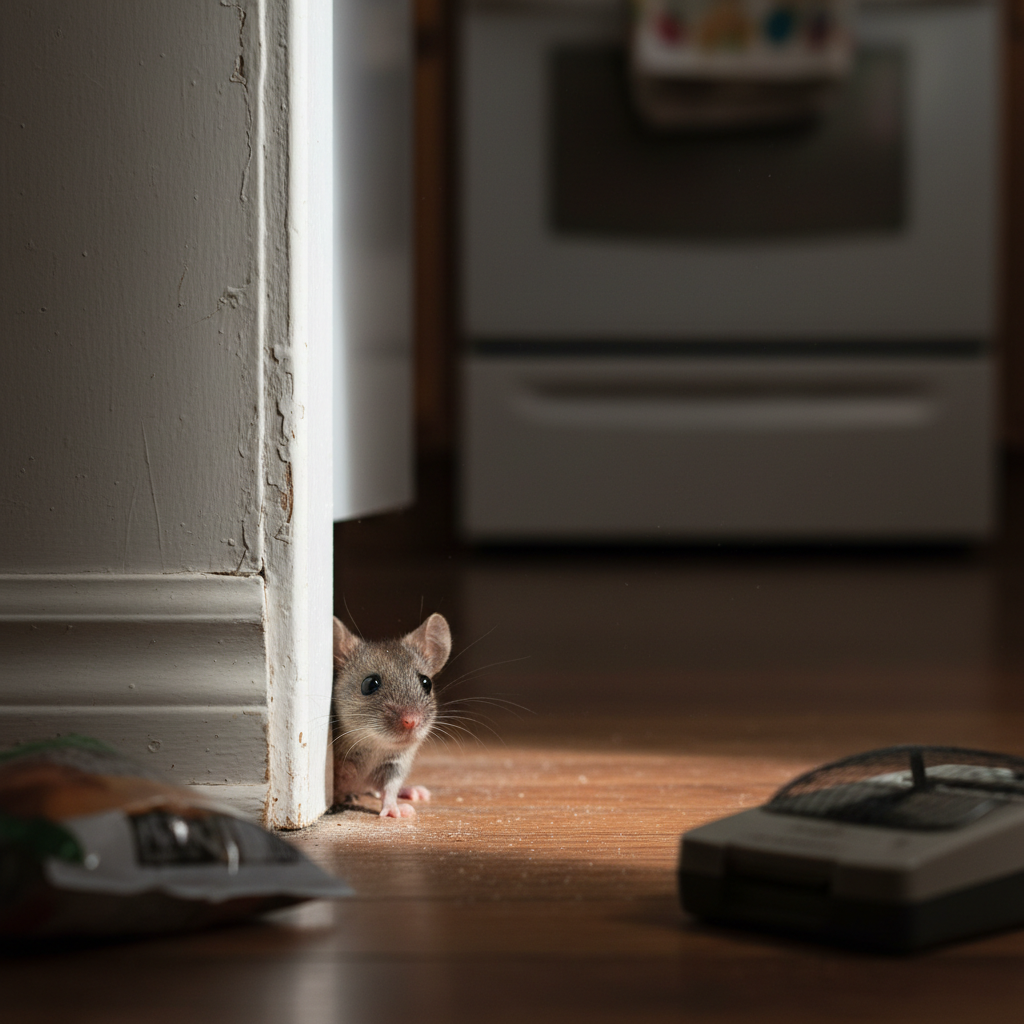
How to Get Rid of Mice in Your House: The Complete 2026 Guide for Calgary Homeowners
Finding a mouse in your house is unsettling. Finding mouse droppings in your kitchen pantry is worse. And hearing scratching sounds inside your walls at 2 AM? That's the moment most Calgary homeowners decide enough is enough.
Mice are the most common household pest in Calgary — and for good reason. Our harsh winters drive them indoors, our rapid new construction displaces field mice into established neighbourhoods, and If you have mice, you're not alone. The good news? You can get rid of them — permanently — and this guide shows you exactly how.
Why Mice Invade Calgary Homes
The Winter Push
When temperatures drop below freezing (which is most of the year in Calgary), mice seek warmth, food, and shelter. A mouse can survive outdoors at -20°C, but it vastly prefers your heated kitchen at +21°C. Starting in October, mouse invasions spike dramatically across Calgary — especially in NE, NW, and new suburban developments.
Construction Displacement
Calgary's ongoing development in areas like Mahogany, Cranston, Sage Hill, and Beltline displaces field mice from their natural habitat. These displaced mice don't travel far — they move directly into the nearest homes.
Chinook Confusion
Calgary's unique Chinook winds cause rapid temperature swings that disrupt mouse hibernation patterns. Mice that would normally stay dormant become active and seek indoor shelter during Chinook events.
Signs You Have Mice (Not Just One)
The biggest mistake homeowners make is assuming one mouse sighting means one mouse. Where there's one mouse, there are almost always more. Here's what to look for:
- Droppings: Small, dark, rice-shaped pellets (3-6mm) found in kitchen drawers, under sinks, along baseboards, and inside pantry shelves
- Scratching sounds: Nocturnal noises in walls, ceilings, or under floors — mice are most active between dusk and dawn
- Gnaw marks: Fresh chew marks on wood, plastic, wires, or food packaging
- Grease rub marks: Dark smudges along walls where mice travel the same routes repeatedly
- Nests: Shredded paper, fabric, or insulation found in hidden areas
- Urine smell: A persistent ammonia-like odor in enclosed spaces
- Tracks: Small footprints in dusty areas or along baseboards
How to Get Rid of Mice: Step-by-Step
Step 1: Eliminate Food Sources
Mice can survive on just 3-4 grams of food per day. Cut off their supply:
- Store all food in sealed glass or hard plastic containers (mice chew through cardboard and soft plastic)
- Clean up crumbs and spills immediately
- Take out garbage nightly and use sealed bins
- Don't leave pet food out overnight
- Store bird seed and grass seed in sealed containers (mice love these)
- Wipe down counters and stovetops every evening
Step 2: Remove Water Sources
Mice need water to survive. Fix leaky faucets, dry out sinks at night, and eliminate standing water in basements or crawl spaces.
Step 3: Seal Entry Points
A mouse can squeeze through a gap as small as a dime (6mm). This is the most important step for permanent control:
- Inspect your foundation for cracks and seal them with concrete or steel wool
- Seal gaps around pipes, vents, and utility penetrations with copper mesh and caulk
- Install door sweeps on exterior doors (including garage)
- Repair damaged window screens and weather stripping
- Cover vents with 1/4-inch hardware cloth
- Seal gaps under siding and around the roofline
Step 4: Set Traps Properly
Snap Traps (Most Effective DIY Method)
- Use wooden snap traps — they're cheap, effective, and reusable
- Bait with peanut butter, chocolate, or bacon (not cheese — that's a myth)
- Place traps along walls where mice travel, with the trigger end facing the wall
- Set multiple traps (5-10) in areas with droppings
- Check traps daily and reset
Where to Place Traps
- Behind the refrigerator and stove
- Under sinks
- Along baseboards in the kitchen and pantry
- In attics and basements near droppings
- Near visible entry points
Step 5: Use Natural Repellents (Supplemental)
- Peppermint oil: Soak cotton balls and place them in problem areas (mice hate the smell)
- Steel wool: Stuff into entry points — mice can't chew through it
- Ultrasonic repellents: Limited effectiveness, but can deter mice in small enclosed spaces
- Cayenne pepper or cloves: Sprinkle near entry points
Important: Natural repellents are supplemental only. They will not eliminate an existing infestation. Use them alongside trapping and exclusion.
When DIY Fails: Signs You Need a Professional
DIY methods work for a single mouse or a very small infestation caught early. But you need professional help when:
- You're catching mice regularly but the problem persists (the population is reproducing faster than you're trapping)
- You hear mice in walls or ceilings where you can't place traps
- The infestation has been going on for more than 2-3 weeks
- You're seeing mice during the daytime (indicates a large population)
- You've sealed entry points but mice are still getting in (you missed hidden access points)
- You have a recurring problem year after year
Professional Mouse Extermination: What to Expect
At Calgary Pest Guard, our rodent control service includes:
- Full property inspection — we find every entry point, nest, and travel route
- Strategic trap placement — professional-grade traps in optimal locations
- Entry point sealing — we permanently seal all access points with rodent-proof materials
- Follow-up monitoring — we return to check traps and confirm elimination
- Prevention plan — advice and options to keep mice out permanently
Rodent Control Pricing in Calgary
| Service | Starting Price | |---|---| | Mouse extermination (1-visit) | $300 | | Rat control (1-visit) | $350 | | Entry point sealing | Included | | Monthly prevention plan | $50/month |
How Long Does It Take to Get Rid of Mice?
- DIY trapping: 1-3 weeks for a small infestation, often unsuccessful for larger populations
- Professional treatment: Most infestations eliminated within 3-7 days of the first visit
- Complete exclusion: Entry point sealing is done in the same visit, providing permanent protection
Health Risks of Mice in Your Home
Don't underestimate the danger of a mouse infestation:
- Hantavirus: Spread through mouse urine and droppings — can cause severe respiratory illness
- Salmonella: Mice contaminate food surfaces with their feces
- Allergies and asthma: Mouse dander and droppings trigger respiratory issues, especially in children
- Electrical fires: Mice chew on wires — a leading cause of house fires
- Property damage: Mice destroy insulation, drywall, and stored belongings
Calgary-Specific Mouse Prevention Tips
For New Construction Homes (Mahogany, Cranston, Sage Hill)
New builds often have small construction gaps. Have a professional inspect and seal your home before the first winter.
For Older Homes (Beltline, Kensington, Mission, Inglewood)
Character homes have more entry points due to settling and aging foundations. Annual inspections are recommended.
For Lakefront Properties (Chestermere, Auburn Bay, Mahogany)
Lake moisture attracts mice year-round. Monthly prevention plans are more cost-effective than repeated emergency treatments.
Frequently Asked Questions
Will mice go away on their own?
No. Once mice find food, water, and shelter in your home, they will stay and reproduce. A single pair of mice can produce up to 60 offspring in a year.
How many mice is considered an infestation?
If you're seeing droppings in multiple areas, hearing sounds at night, and catching mice in traps regularly, you likely have 5-15 mice minimum. One or two sightings with no other signs may be a single mouse that recently entered.
Are mice dangerous to my pets?
Mice can carry diseases that affect cats and dogs. Additionally, if your pet catches and eats a mouse that has ingested poison, secondary poisoning can occur. Always inform your pest control technician if you have pets.
How much does professional mouse removal cost in Calgary?
Professional mouse extermination in Calgary starts at $300 for a single-visit treatment, including trap placement and entry point sealing. Monthly prevention plans start at $50/month.
Can I use poison to get rid of mice?
We generally don't recommend poison for indoor use. Mice that consume poison often die in wall cavities, creating odor and hygiene problems. Trapping and exclusion is the preferred professional method.
Don't Wait — Mice Reproduce Fast
A mouse population can double every 3-4 weeks. What starts as one mouse in October becomes a serious infestation by January. Early intervention is dramatically cheaper, faster, and more effective.
📞 Call Calgary Pest Guard at (825) 760-5364 for a free inspection and quote. Same-day service available across Calgary, Airdrie, Cochrane, Chestermere, and Okotoks. Mon–Sat 8AM–8PM.
Licensed, insured, and 100% satisfaction guaranteed.